







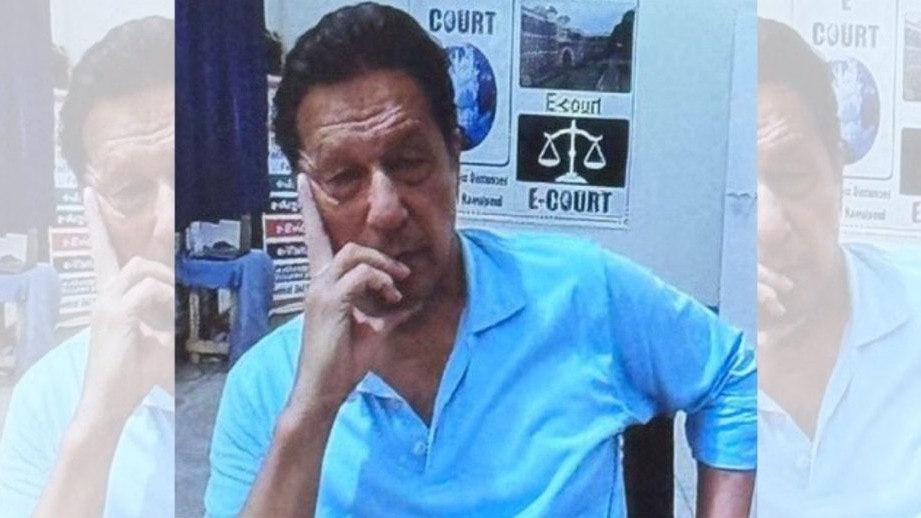
Imran Khan’s Last Message Ignites Political Turmoil in Pakistan
Former Pakistani Prime Minister Imran Khan’s supporters are reeling after his last message on X, posted 24 days ago, reveals alarming insights into his condition and the political landscape in Pakistan. The message, shared on November 5 following a meeting with his sister in Rawalpindi’s Adiala Jail, is seen as a critical window into Khan’s struggles as he remains imprisoned since August 2023.
In his post, Khan directed his ire at "one man,” Army Chief Asim Munir, claiming he embodies the essence of what he termed "Asim Law," asserting that there is "no rule of the Constitution or the law" in Pakistan. He described Munir as "the most tyrannical dictator in history," capable of anything to maintain his grip on power.
Khan, who vowed he would "neither bow down nor submit," accused Munir of orchestrating widespread oppression, declaring that the regime "showed no regard for women, nor any compassion for children and the elderly." He alleged that Munir is responsible for purposely obstructing legal processes to prolong his imprisonment, stating that "all power rests in the hands of one man."
Experts suggest that this latest statement underscores the deep-seated tension between Khan, a prominent Pathan leader, and the military establishment. Khan’s claims reflect a broader concern regarding the growing authoritarianism under Munir’s command, amidst fears of escalating violence against members of Khan’s Pakistan Tehreek-e-Insaf (PTI) party.
The government remains largely silent on these allegations, with prison authorities asserting that Khan is "in good health." However, this raises pressing questions from his supporters: If he is indeed in good health, why has there been no communication from him in more than three weeks?
The absence of clarity surrounding Khan’s wellbeing has intensified calls for transparency as his supporters, family members, and party colleagues urge for proof of life amid fears for his safety. As Pakistan’s political tensions escalate, Khan’s words may serve as a critical commentary on the nation’s deteriorating rule of law and civil liberties, highlighting the fragile state of democracy in Pakistan.
As the situation develops, Khan’s next moves, alongside the establishment’s responses, will be pivotal in shaping the political future of the country.


